

This article is also available for download as a printer-friendly pdf.
Visit Arthurs web site, Woodbug: A Lost Woodworkers Adventures.*****
Inspiration
By Arthur Lamon
Introduction Im a product design graduate, and being a designer, I should be inspired at all times. That’s not quite possible; nobody is a walking pile of inspiration and that’s why there are several nifty tools to help you generate new ideas. During my studies I was trained to brainstorm and put those tricks to use, literally trained boot camp-style. Well, not literally. The tools that taught me to think like a product designer are more general so they are mainly used for solving problems, generating new product ideas and inventing things the world hasnt seen before. In woodworking, that’s not really necessary because normally it’s not about a completely new idea or product, but an interesting look at an existing product like a table, bed or a maybe a wooden flashlight. The tools I use daily for designing things in wood are simplified versions of the brainstorm techniques that are used in product development. They only have to generate a form, not a new function to save lives while being more eco-friendly and safe to use for 95% of the population.
In this essay I’m not going to focus on what-to-make, but on making your designs more interesting and which simple tools might help you to do so. Nevertheless, some of these tools are also applicable for what-to-make.
Step 1: Know your restrictions
 Before going crazy on the design, it’s good to know your restrictions. My main source of inspiration is the function. I’m educated by the form-follows-function-principle, so if my object has to satisfy a certain function, I find it essential to let it guide me. For example, for the latest cabinet built I knew exactly what I’d display in it, so the whole cabinet is designed around that particular function. You still have enormous amounts of freedom, but there are some parameters that you should keep in consideration at all times. It’s like building a table; if a customer expects you to make a table for 8 people, make sure 8 people can sit at the table and not just 6 because you think it’s prettier. The table has to be a comfortable height so people can sit at it to start with. And don’t forget to make sure the table is strong enough for all possible uses for a table. If you do not keep these considerations in mind, the client might end up being disappointed, even if the design is something out of this world.
 The list of considerations and restrictions is a design brief, and every possible design has to be compared with it to test if it’s on the right track. To make sure you can properly test the considerations, first you have to make them measurable. Being able to seat 8 people on the table has to be translated into dimensions for the table, the same for the ideal height. This way you can really verify your design instead of guesstimating it.
 If you have an easy project with just two things to keep in mind, don’t worry all too much about it, but if you have a more complicated project with lots of restrictions and demands from the client, you’d better make a real checklist so you don’t forget anything and you can easily verify your designs every time you have to make decisions. The design brief is something you can make together with the client because this way you can be absolutely sure you’re on the right track.
Although the word restriction doesnt sound like a very inspiring word, it helps me a lot in my designs through limiting the endless array of potential options. It’s very important that not everything is a possibility. Designing an object is easier when you know the functional limitations (seating 8 people) or expectations and style of the client. If you’re completely free to do whatever you like, chances are that you shut down instead of being inspired by the freedom. Nothing is as annoying as a client that lets you do whatever you want because they trust your abilities completely or because you are the designer.
Step 2: Fill that libraryA great source of inspiration is looking at the world, at nature and man-made objects. That’s a free and effortless source of inspiration; you just got to be open to it. We work with natural materials, so of course you can find loads of inspiration in nature. I share the same sources of inspiration with a lot of other woodworkers:
- Furniture catalogues and furniture shops don’t only keep you updated about what’s out there and what the latest trends are, but they can also have a very inspiring effect. The Billy Bookcase of Ikea is a bit traditional, but what happens if you build one in solid walnut with bronze inlay? It might just be a new designer piece. A lot of my catalogues are from furniture manufacturers that don’t even make wooden furniture, but only use metal and plastic. It’s very inspiring to translate their designs in wood. It makes for a totally different effect and a nice start for the design process. There are an infinite amount of catalogues; all possible types of furniture, styles, materials, … Most of them include pictures of the pieces of furniture in an interior or landscape. This gives you a nice view on the impact of the piece, the dimensions in a real situation and for example what type of chairs best suit the table. Determining the dimensions might be a little difficult if you design something from scratch in a sketchbook. At least use a real example to help you decide on the dimensions you need. Once those are determined it’s a new bullet point on the design brief. If you have a client that needs something that’s not your style, it might help to browse a catalog with furniture in his style.
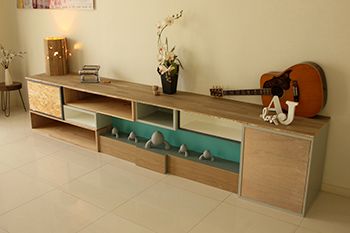
- Woodworking books and magazines are stuffed with new techniques and inspiring projects from readers. Step-by-step explanations of projects could be very inspiring because you see how others work. You don’t just learn new techniques but it challenges you to apply those techniques in other designs. If you are a novice woodworker wanting to try lamination, why make a cutting board like everyone? Make a birdhouse from laminated scraps and you instantly have a modern art birdhouse. Unless you’re in desperate need for a cutting board, like I was last week.
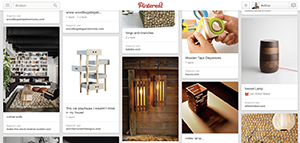
- The internet. I love books, magazines and catalogs because those are well-arranged. This can’t be said about the internet which is absolutely replete with information that it’s more frightening than inspiring. While there’s just too much information, there are also wonderful tools on the internet to organise all this information into manageable chunks. The one I use all the time is Pinterest and I’m absolutely loving it! I mainly follow boards that have somewhat to do with wood and interior design, so every day I have truckloads of pictures right on my homepage, all somewhat my style and ready to inspire. I just have to look at them in the right mindset. This is one of the tools that is also very useful to find inspiration on ‘what’ to make, because daily I stumble upon things I haven’t even thought about making in wood, like a USB-stick or an iPhone cover. Woodworking is big on Pinterest, so it’s also a great source of inspiration for shop made tools, joinery, fancy hardware and tutorials about every aspect of woodworking.
Step 4: Tools to get the most out of your libraryThe point of the design process is to make things interesting. A box might just be a box, but if you want to make it exciting, there are a few tricks to do so. Making simple things interesting is easily done by making some straight lines into curves or including some color accents or nifty things like dowels or splines. If you have a complex design most of the times it’s already interesting because of its complexity, for example because of the different materials, the joinery, the large amount of detail,… If you have a very simple design, it might be awesome because of its simplicity. The problem area is in the middle; when your design is not very simple and not very exciting. You can choose if you want it to be more clean and simple or extremely interesting and complex.
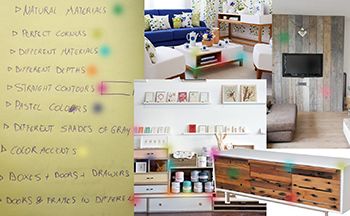
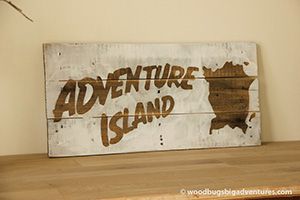
This tool is also applicable if you have to design and build a piece of furniture for a customer that has a different style than what you’re used to. Just look at the furniture he loves, either pictures he found online for inspiration, or the furniture he already has in his house and do the same exercise.
The last thing you need to do when using mood boards is check if your new design fits the bill. You do that by placing your design on your mood board and it should blend in perfectly. If it doesn’t, go back to the drawing board.
The last tool I’ll describe here is one I use to make existing designs more original. It’s just a list of ‘what ifs’; when you have an idea in your head, challenge it with some questions like ‘what if it was bigger?’, ‘what if it was smaller?’, ‘what if it had hair?’… This tool is very useful to challenge your own designs and make them more interesting. Imagine you’re making a desk lamp, how cool would it be if you took your design and just scaled it to a floor lamp without altering the proportions? With asking a simple ‘what if’-question you just came up with the awesome idea to make a gigantic desk lamp with 4x4’s and M24 bolds. Isn’t that way cooler than the millionth desk lamp? What if you add a splash of color? If you want an original and modern table, you don’t have to make a modern design, an 18th century table will do just fine. Just paint one of the legs bright pink and all of a sudden it’s a modern design-piece. You can find an overview of 100 challenging and inspiring ‘what if’-questions in this slideshow:
100-Whats of Creativity from Don The Idea Guy Snyder
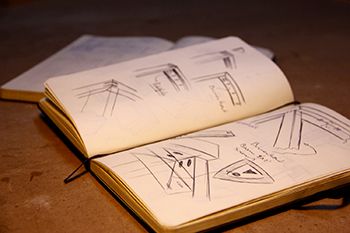 Last but not least: keep a sketchbook! Dont sketch or write on loose papers because they will get lost or thrown away. It might be very inspiring to go through a sketchbook of 10 years ago, a year ago, or a week ago... Its not because an idea didnt make it for that project that its bad or that certain things cant be implemented in your new designs. And if you have a sketchbook, you should sketch while designing. Don’t feel bad if you’re not the best at drawing, nobody cares because you’re making amazing stuff in wood! But for designing those pieces of furniture, sketching is essential, so grab a pencil and go wild.


