Tampilkan postingan dengan label inspires. Tampilkan semua postingan

Jumat, 03 Juni 2016


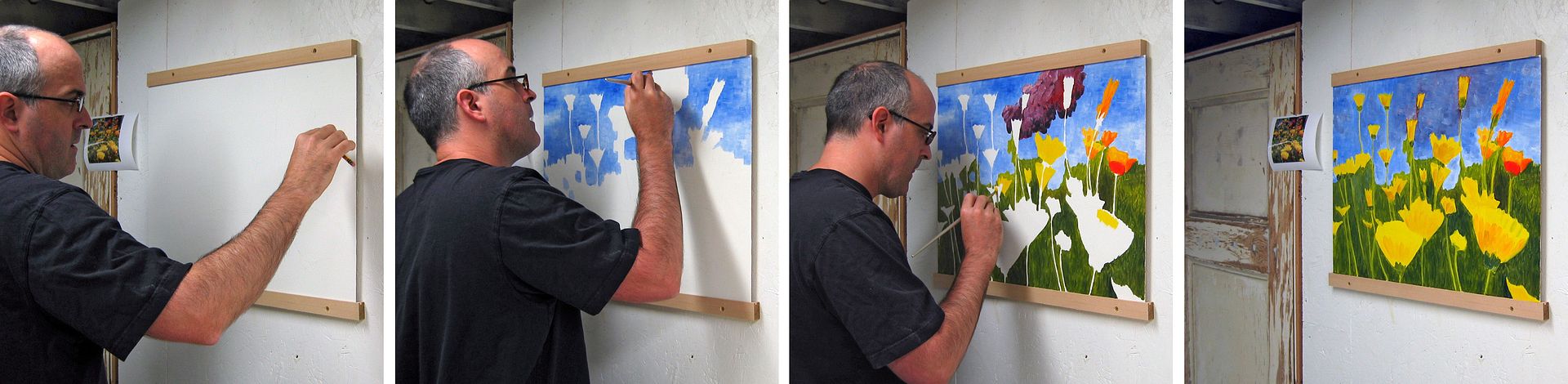
Birthday presents and happy accidentsWhat I find fascinating about making certain kinds of art is that there can be a satisfaction in the separation of the initial, mostly mental work and the resulting physical piece. One begins a project as a mental exercise that is a lot like a scientific experiment. A process is then run to get to the physical outcome that results in an abstraction of the work one did at the beginning. The end result is hypothesized, but unknown until the piece is finished. When painting you are seeing the final outcome as you produce it. Each brush stroke is in plain sight; each brush stroke can be modified, but it is modified in the same way it was originally created. There is no separation from the original thought and the physical existence. There is no surprise. However, if one were to create a paint by numbers picture from scratch, starting with the mental puzzle of drawing shapes and placing numbers in them, thus seeing the outcome in ones mind but unable to create it, this is what is inspiring. This is what draws me to woodworking, filmmaking, and photography. It’s making a birthday present for yourself, yet not knowing what it is.
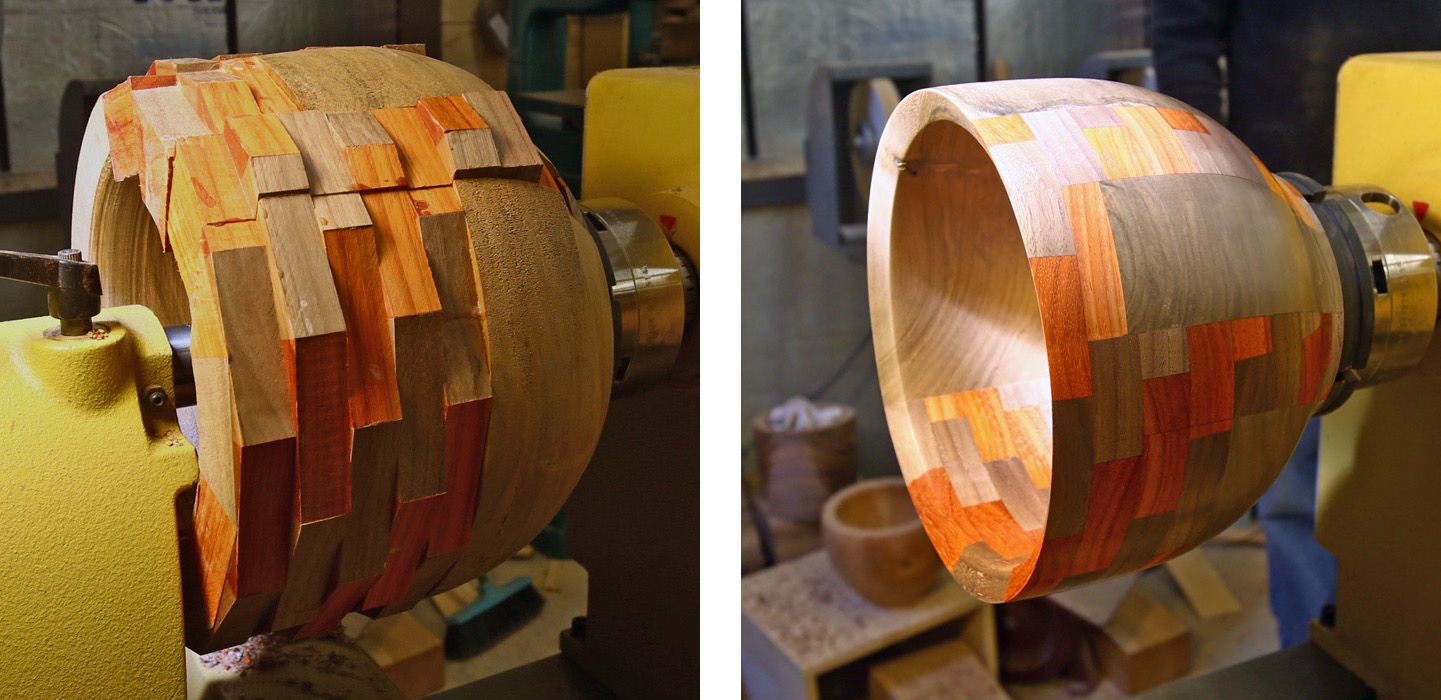
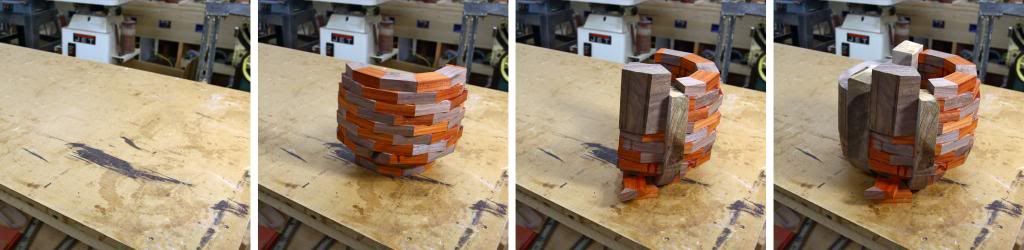
I see this concept most in woodworking when gluing parts together that then get carved into a new shape. A specific example is segmented turning. Pieces are cut out and glued together in a way that alludes to the final piece. The final piece is only revealed when the process of turning is applied. This is why I like to be precise only with the seams between each piece, and allow the patterns and outer shape of the work to be rough. This roughness puts separation between the beginning and the end, and allows for more surprises. One has to think about the final product separated from the images of the final product.
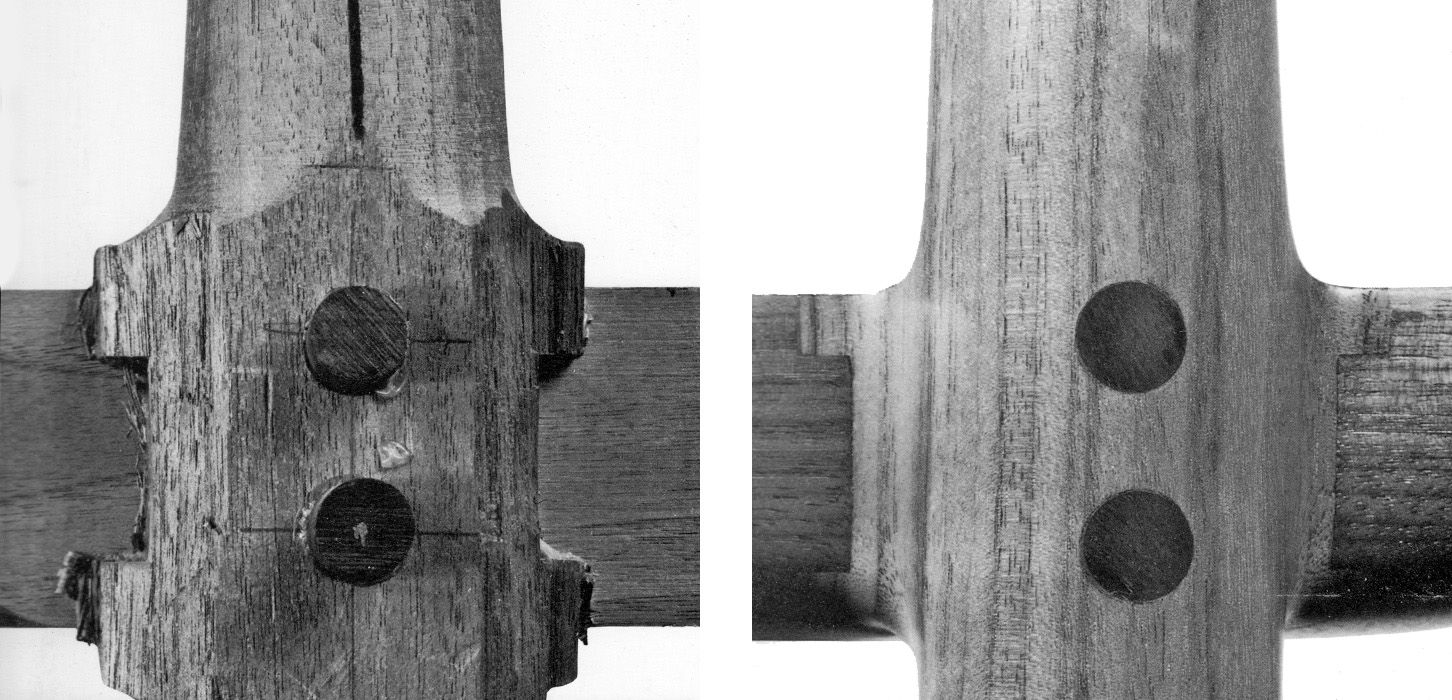
This is what I like so much about Sam Maloofs work, in that he would glue up a tight joint of several pieces coming together, then carve it into a beautiful single object. The thought process of the initial steps of putting the pieces together combined with the process of carving makes a new form, with the newly revealed patterns of the original joining of the wood.
This idea used to be more prevalent in film photography, especially when shooting action or long exposures. The act of snapping the shutter on the camera was a mental experiment, with an outcome not revealed until the prints were made several days later. Now with digital photography and the short amount of time between taking the picture and seeing what one gets, I will often put the camera down in some flowers or up over my
head and just snap pictures, trying to separate the image of the final outcome from the mental exercise at the moment. This same thing happens when making a stop motion animation. The mental experiment of planning and then moving the set pieces has no physical similarity to the final film. I have to see the final piece in my mind and translate that into moving set pieces over an expanded time interval. This is what makes the monotony of making a stop motion animation exciting. There is a setup with an uncertain outcome. I have to think through the making of a work of art without any feedback until the frames are strung together to make the final scene, which is almost always better than I had imaged.
This is the beginnings of understanding. When one runs this experiment over and over again, the experience guides the initial setup and the link between this setup and the outcome becomes deeply understood, allowing one to take the experiment further and discover ever more exciting aspects of ones art.
Read More..

Selasa, 24 Mei 2016

Todd A. Clippinger started doing home remodels in 1997 and developed a penchant for working on period homes: repairing and duplicating period trim, doors and built-ins. He discovered that not very many people could do this type of work but Todd enjoyed the challenge and was good at it.Todd became a juried artist in the 2007 Western Design Conference based on his craftsmanship and design. His projects include fitted and freestanding furniture and furnishings.He maintains his workshop in Montana where he builds beautiful custom furnishings for high-end clientele. Please visit his web site: American Craftsman Workshop. Todd is quite active in the online woodworking community and shares his knowledge on his YouTube channel. For the Inspiration Project, Todd made this video which has great advice for woodworkers of any skill level. ***** ****Selected works by Christopher Schwarz:
Read More..

Senin, 09 Mei 2016

Sheila Landry, based in Nova Scotia, Canada, is one of the most prolific scroll saw woodworkers, designers, and artists today. She has been a Contribiting Editor to Creative Woodworks and Crafts Magazine for 15 years. The variety and scope of patterns available on  SheilaLandryDesigns.com, is astounding. Be sure to stop by and pick her latest catalog.
This article is also available in a printer-friendly pdf.

Inspiration.
When I was first approached to write an article on the subject of inspiration, I thought it would be easy. There are many sources where I find inspiration and I am constantly full of new ideas. It seems that my biggest challenge that I experience is finding the time to implement all the ideas I come up with and convert them from ideas into reality. But as I sit here and begin to write, I find that talking about what inspires is a somewhat daunting task, as I realize that because there is no one single thing or place inspires me, it is a bit difficult for me to organize my thoughts and present them to you in an orderly manner. 
Inspiration is all around us. We only need to train ourselves to sit back and observe and allow our senses to recognize it for what it is. That is not always automatic or easy. 
Some of us are born with the longing to create.I know I was. Some of my earliest memories from my childhood are of me sitting on the porch of my Chicago home and embroidering designs on my grandmother’s tea towels. I was always a busy child and my grandmother had some iron-on transfers and pretty colors of DMC embroidery thread and she taught me all the basic stitches in hopes of keeping me busy. To this day I still remember her telling me that “good embroidery is judged not only how the front of the piece looks, but also how neat the back looks.”  It is funny how those words have followed me all throughout my life, and to this day I take care with being sure that my projects not only look good from the front side, but from the back as well. It was an idea that was instilled in me at an early age, and it became something that set a standard for my lifetime. 
As I grew up, I found the satisfaction of ‘making things.’ From coloring, to bead work and even sewing -  the more I made things, the better and more accomplished I felt. We didnt have a lot growing up, but we always kept busy by doing assorted crafts and making things to play with that we didnt have the money to buy.  
During my grammar school days, my best friend and I would also spend hours making things. We drew flip books and made hand-sewn toys and puppets out of scraps or old clothing, or we made jewelry out of bead kits that were inexpensive and easy to find. It was then that I discovered painting too and found that I liked to replicate things through painting. There was something amazing about being able to re-create things around us and creating became an important part of my life. 
It was at this time that I began to look at the world around me in a different way. No longer were clouds just “clouds”.  They were soft transitions of colors and they had depth and thickness and soft shapes. I would look at a sky and think of the colors I would need to paint them in a painting. I would look at the transparency of a cat’s ear and wonder how I would translate it to a painting or even a drawing and still show its sheerness and delicacy. These were all the types of things that began to fill my mind on a regular basis.
Looking at wood differently
As I began woodworking, I looked at wood differently as well. The beautiful curve in the legs of a table. The intricate pattern of the crown moulding in an old building. The inlay work on my old bedroom set that was built in the 1940’s. I noticed so much more than I had previously when I looked at something, and I found it made me want to learn more and create more and replicate what I had seen. 
I started doing scrollwork over fifteen years ago. Like many, I began using patterns that were created by others. One of the first projects that I decided to make was an 18” spandrel for my best friend who was remodeling her kitchen. I had just purchased a scroll saw and couldnt wait to see what I would be able to make with it. I found a pattern for a jewelry box in a book and the pattern on the lid of the box was just what I was envisioning for the spandrel, so I enlarged it and used it for the project. Little did I know that would be the beginning of my career designing woodworking patterns. 
There was much to learn with scroll sawing. During those first years of woodworking, each project brought with it more valuable knowledge that enabled me to advance. As my skills improved, so did my dissatisfaction of patterns that were available. Soon I began changing others’ patterns more and more to suit my needs and before long I was designing projects completely on my own, using my own ideas and techniques. Without realizing it, I had crossed an imaginary line and went from being a student to teaching others. I set up my website and began selling my patterns and contributing designs to woodworking magazines.  
Fifteen years later, I am still here designing. I have more ideas than ever and I only hope that there will be enough hours in each day for me to accomplish what I set out to do. Many times I have people ask me where I get my ideas from, and the only way I can truthfully answer them is with one word - everywhere!
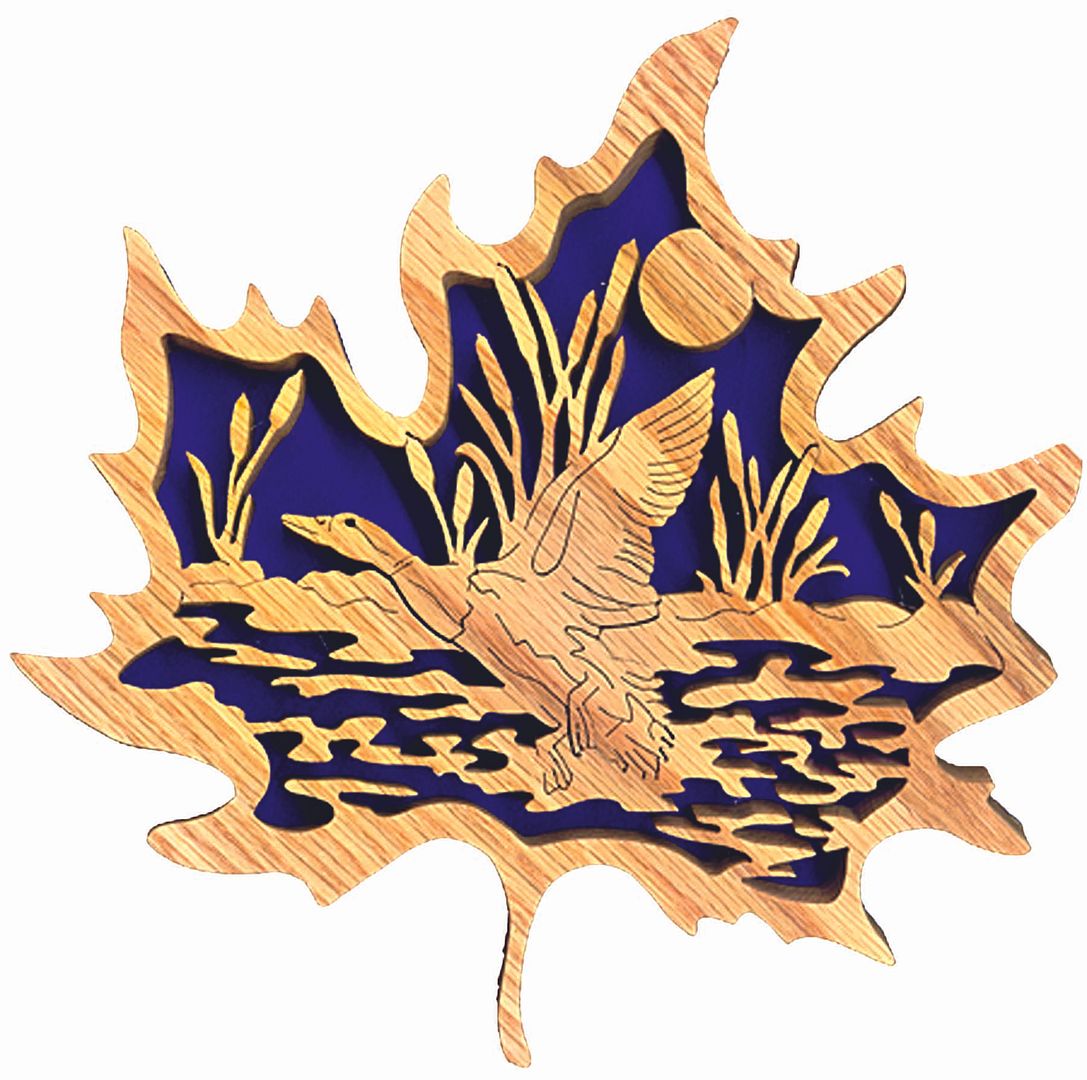
Mallard Duck Forest Leaf Plaque
We only need to open our eyes and look around us.Inspiration is everywhere. I find it as I walk through the woods near my house. The shape of the leaves. The sound of the birds singing. The toad stools growing on the fallen logs. I am inspired by smells and sounds and shapes of all that are around me. A single idea, such as a fallen leaf, can lead to an entire series of designs. 
There are other places which inspire me as well. Growing up in the Chicago area, I was able to see and appreciate all the beautiful architecture that the city had to offer. In my early 20’s, I worked for Continental Bank, which at the time operated out of eight buildings in the downtown Chicago area. I loved working in the big city, and will never forget that first day when I walked in to the lobby of the bank. I was taken aback by the stunning design of the building, and I felt as if I had gone back in time. In working at the bank, I was exposed to many of their different buildings, including the Rookery Building, which was designed in part by Frank Lloyd Wright (In 1905, Wright was commissioned to update the interior of the light court and lobbies.) The beautiful lines and appointments of buildings not only in Chicago, but all over the world have made a huge impression on me, and has inspired many of my designs.
The Rookery Building, Chicago
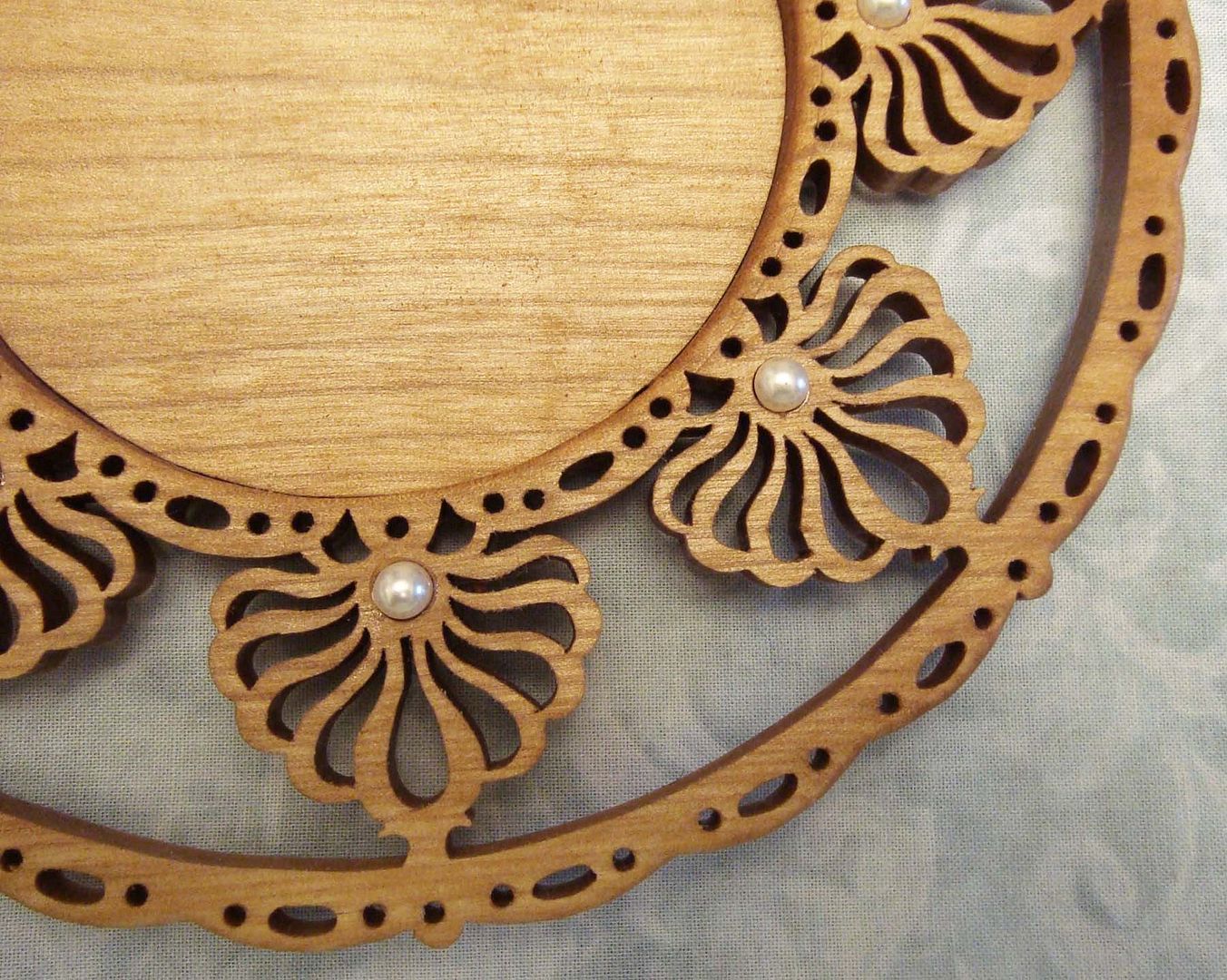
Classic shapes from nature, as well as animals, flowers, and even seashells inspire me. I like to take a form from nature and transform it into wood. I found that adding simple embellishments such as pearls or crystals really made even a simple project look polished and finished.
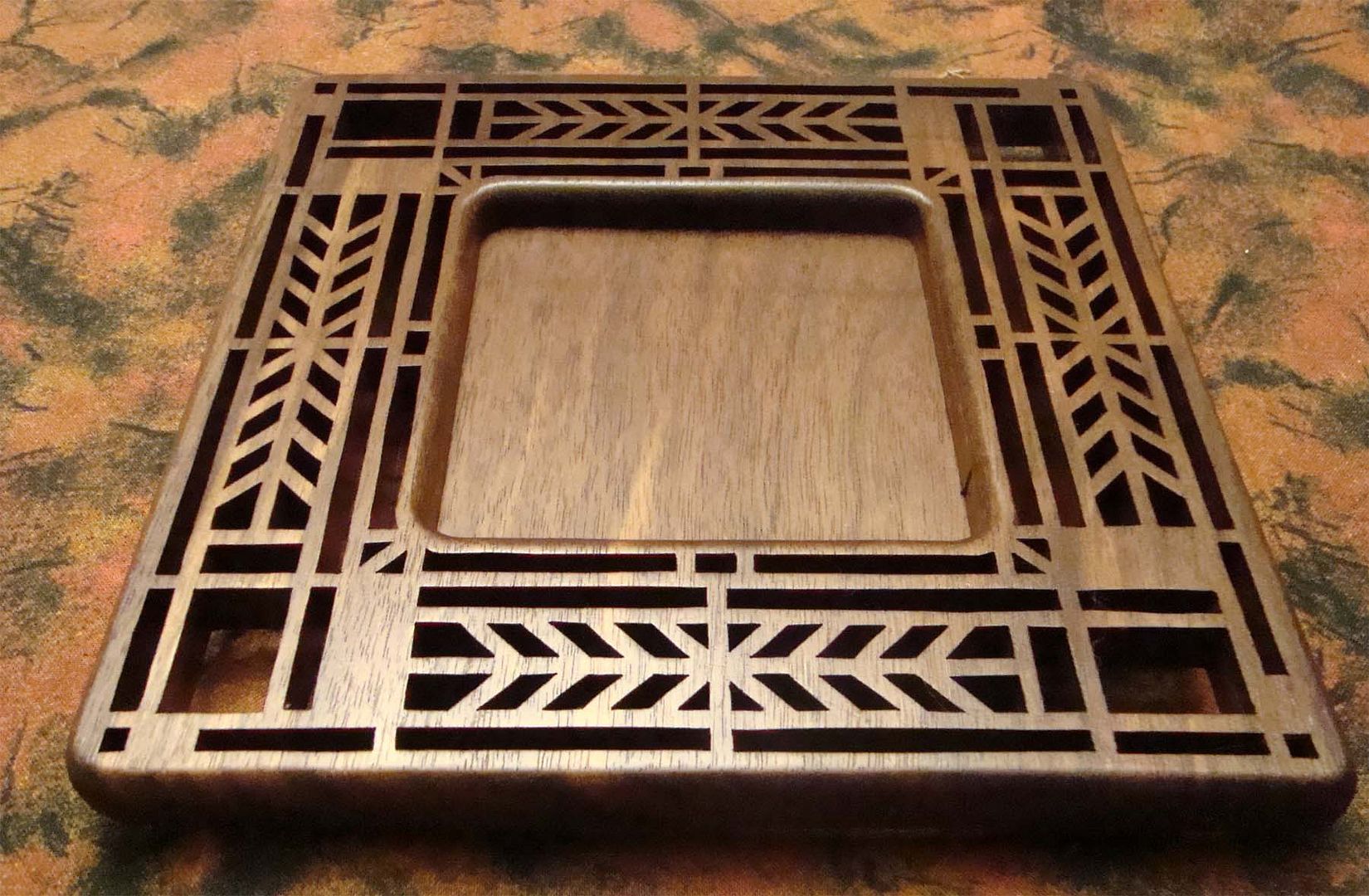
Wright Inspired Candle Tray
I find that I am very inspired by nostalgic items as well. There is a certain amount of comfort that I feel when recreating simple items from days gone by. I think that people relate to these items and the projects help to bring them back to what they perceive as simpler times.  These replicas evoke feelings of security and reassurance to many, especially in these uncertain times.
Fretwork Candle Tray
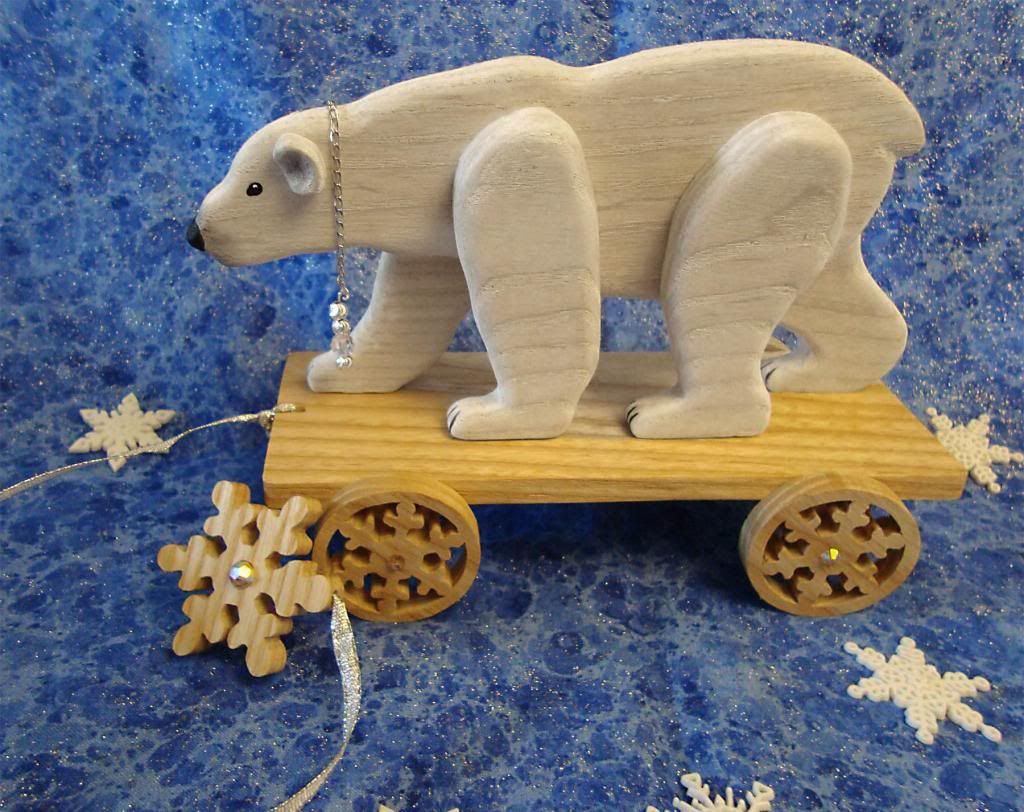
Polar Bear Pull Toy
Functionality also feeds my inspiration. Items of necessity are very popular, as they not only look aesthetically pleasing, but they also provide a service. Items like boxes, cheese and candle trays, eyeglass holders and other useful items prove to be a wonderful basis for finding inspiration. I look at similar items and think how I can make them unique and the result can be anywhere from classical...
...to comical:
Cheese Please Tray
Additionally, I do find inspiration from different holidays. Whether nostalgic or modern, people love to celebrate and decorate for the holidays. Surrounding ourselves with pieces that depict certain holidays can bring to surface all those feeling of holidays past with our family and friends. Inspirations include cards, movies, a song, or even a group of holiday colors that bring thoughts of a certain season.  Translating these inspirations into wood working project is both fun and exciting. I just never know what I will be inspired to do next!
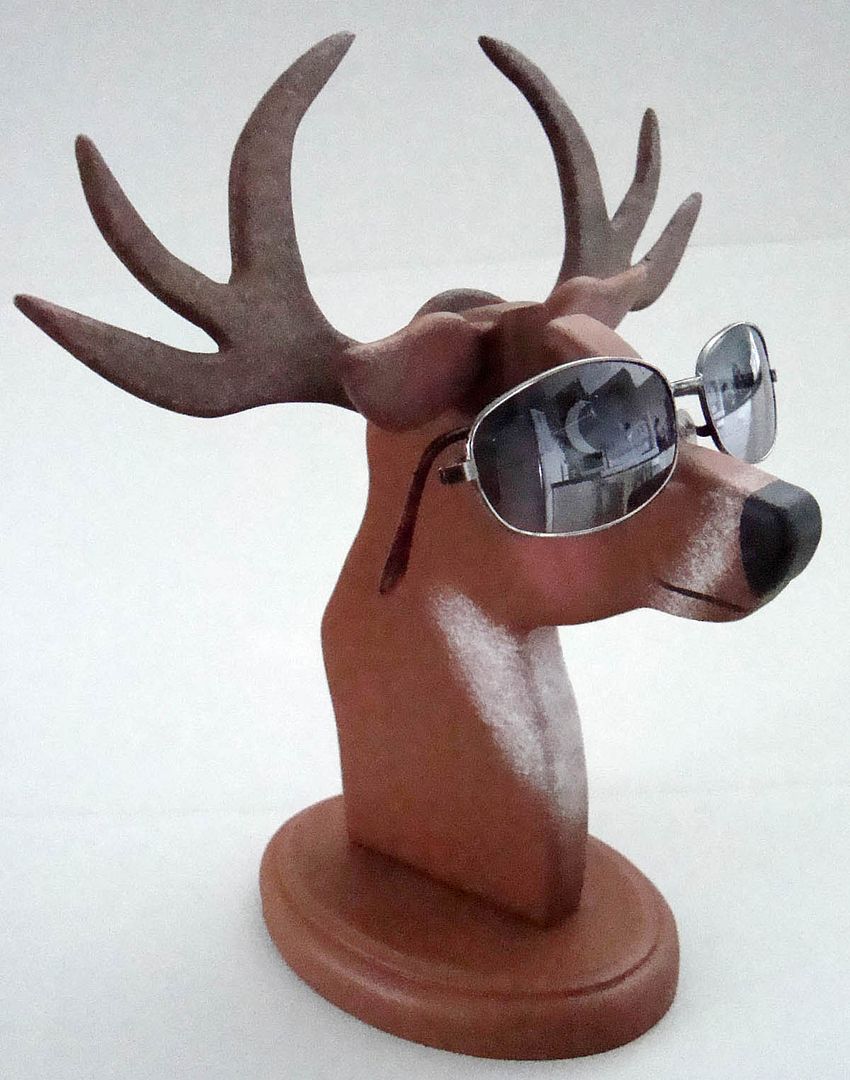
See Creature White Tail Deer
Share with other creative peopleFinally, I find a great deal of inspiration from other people around me. As an artist and designer, I surround myself with other positive and creative people. I find that the best way to be creative and inspired is to share ideas with others who share your passion for creating. It doesnt have to be people who have your exact interests. Besides woodworking, I also do a bit of painting and I find that both groups of people are a very positive influence in my life and keep me motivated and excited and passionate about what I do. 
Finding the right people either in nearby clubs or classes can be very stimulating, and communicating with others who have similar interests as yourself is a wonderful way to keep those creative juices flowing.  We are fortunate to live in a time when we have access to many wonderful social groups and classes though the internet. Especially for those who are like myself and live in a remote area, these groups are imperative for social interaction and I believe they do a great deal to inspire creativity. Many groups have wonderful exchanges and things of that nature which allow you to share your creativity with others who enjoy it. The feedback and resources these types of interactions allow is something that is very important to many, and many depend on it to keep a positive outlook and keep motivated.
So what happens when we just don’t feel inspired? 
Everyone has those days, I am afraid. It seems that sometimes (usually when you need it most!) you just can’t seem to come up with an idea that you feel is good enough to move you forward. You may have a deadline for a show. You may have a birthday or special occasion that is approaching and you NEED to come up with something new and unique for the event. It feels as if the walls are closing in and you arent able to think of anything that strikes your fancy. It is not a good place to be!
While many feel that trying harder is the answer when this occurs, I find that the opposite has helped me more than not. When I have a deadline to come up with an idea and I have been wracking my brain as to what to do, I find that ‘disconnecting’ for a while and changing gears does wonders to help me get back on the creative track.
Sometimes I go for a walk, and try not to think about anything in particular. Other times I take off and head for the beach, where the sound of the waves and the warmth of the sun are the only things that I am aware of. Sometimes spending time alone, with only yourself and your thoughts, is the best way to give yourself the rest you need and get those creative juices flowing.
Stop and disconnect
While being connected to the world is definitely a plus, there are times when we feel overwhelmed and overloaded and we just need to stop and disconnect.  Our heads are so full of family, chores, work, bills, and countless other worries that it is difficult for us to relax and focus on ourselves. I regularly take ‘quiet’ time where I try to have as little input as possible to give my head a rest. My early morning times are a great time for me to quietly contemplate what I wish to accomplish for the day. I guard that precious time fiercely and I try to allow some time to be thoughtful every single day. I am amazed at how well this short time of quiet clears my head and allows me to ‘reboot’ and feel as if I am starting fresh. I find that most of my best ideas come to me during these quiet times.
Finally, I am going to close with a bit of advice about your inspirations. I suggest you keep a small notebook near you, and use it to record any thoughts or ideas you may have regarding projects. Even if an idea seems silly at the time, you may look back on it later on and it could be a springboard for something else. This also helps you be more aware of things around you and helps you see the inspirations that are always there for the taking. 
There is inspiration all around us! All we need to do is to open our eyes, be aware of it, and allow it to come into our hearts and souls. While what inspires each individual is unique, we live in such a wondrous world that there is plenty of inspiration for all of us. We only need to allow it to find us.
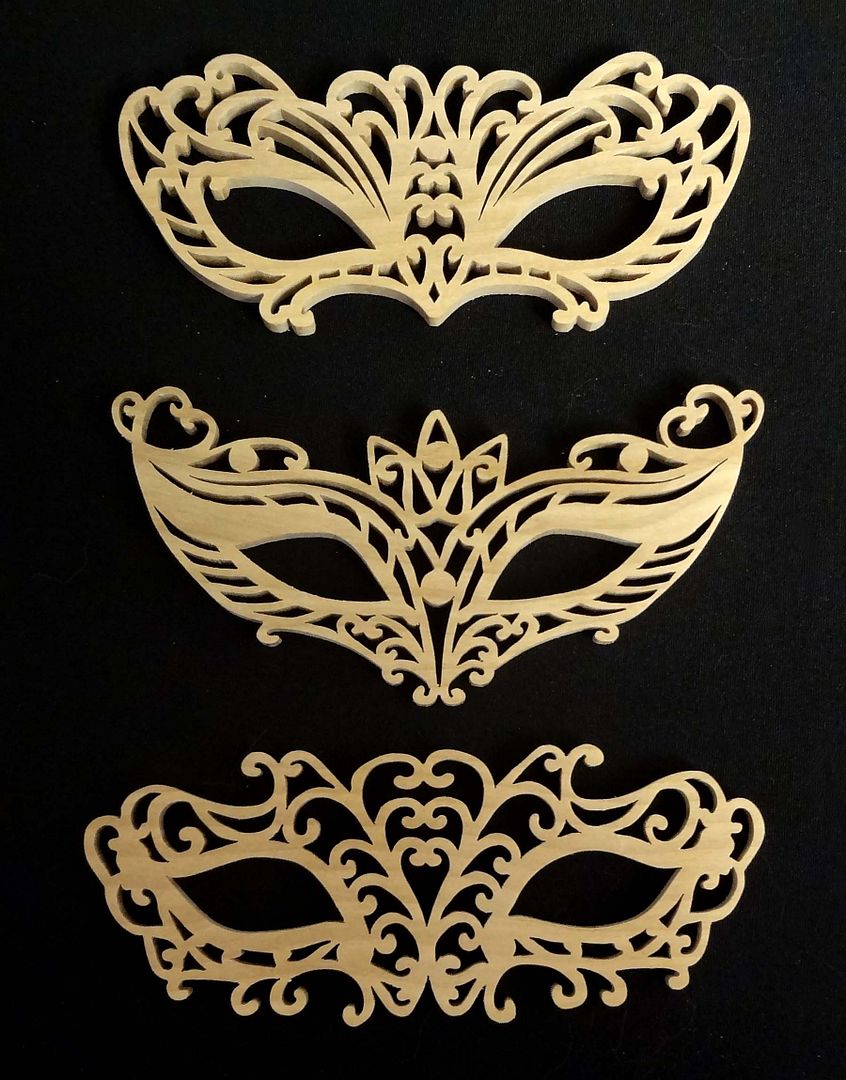
Fretwork Masks
Read More..

Rabu, 13 April 2016

This is the first entry into a new series called the Inspiration Project. Each Tuesday I am asking creative people (some you may recognize and others I hope to introduce) for their responses to the simple question, "What inspires?" They can interpret that question however they like and submit their responses in any form they choose. It might be an essay or a video. Maybe a poem or script. Perhaps a sketch or a photo series. Inspiration has no rules.
*****
"Everybody struggles with inspiration at some point in time.  I think that the most important thing is to do something." - Chris Wong 
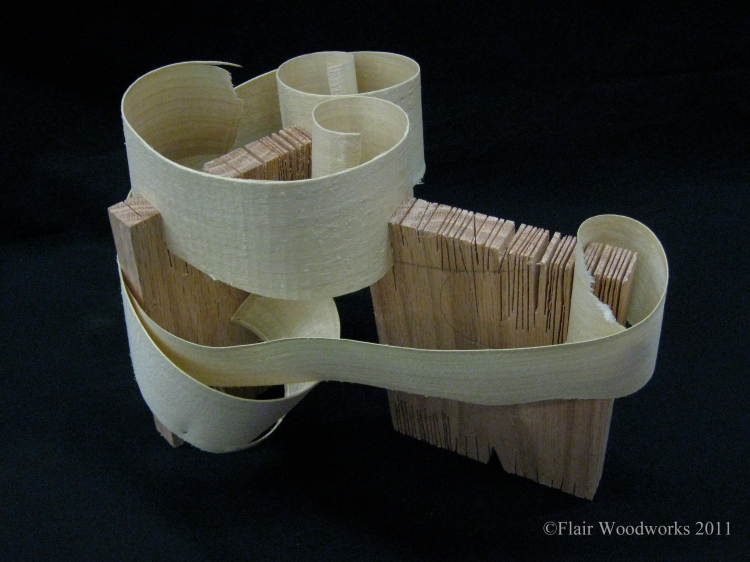
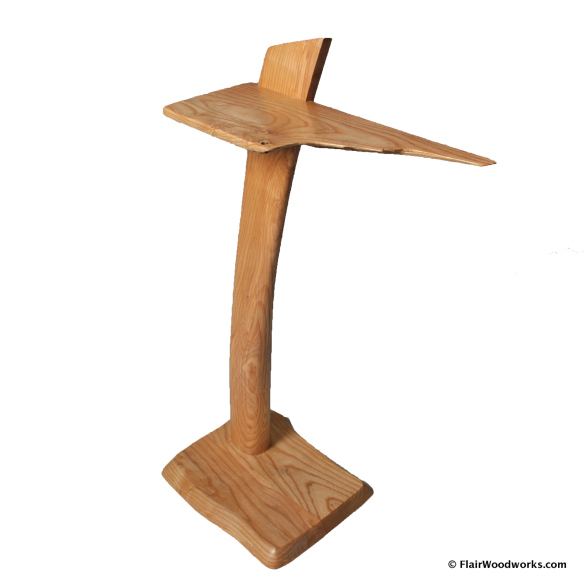
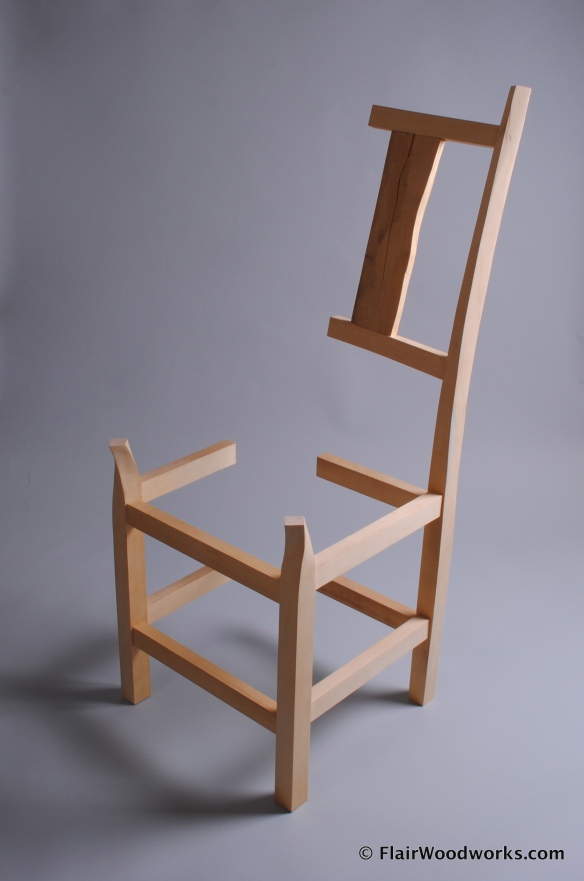
Vancouver-based Chris Wong is a self-taught woodworker who creates art that is sometimes fluid, sometimes angular, often organic-looking, yet inspired by man-made objects. All of his pieces cause my eyes to linger and examine.
I didnt have to think twice about asking him kick off this series. Inspiration surrounds all of us: Chris just keeps his mind open to it.
Visit Flair Woodworks, to see much more of his work.
Chris decided to submit a video as his response to the Inspiration Project. I hope after watching it you take a moment to consider the possibilities surrounding you every day, and how you might apply them to your own creations.

Read More..

Senin, 04 April 2016

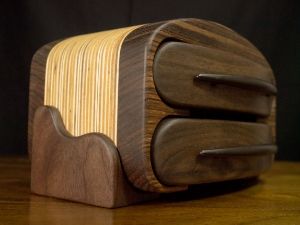
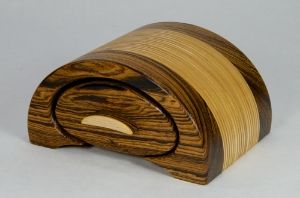
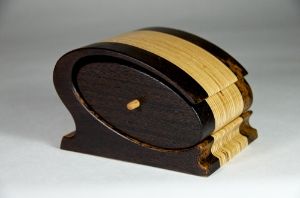
David Picciuto (AKA: The Drunken Woodworker) first drew my attention by combining exotic woods with lowly plywood to create stunning bandsaw boxes. Contrast is a bold way to create interest in art and highlighting exposed plywood edges challenges woodworking "rules".
 
David sells his pieces at art fairs and online and makes his living as a web developer in Toledo, Ohio. Visit Davids web site at DrunkenWoodworker.com.*****
Envy. Envy is a huge inspiration for me. Or does it motivate me? I often get inspiration and motivation confused. Anyway, what gets the synapses firing in my right brain is looking at other people’s art. I get envious because it’s so good, because it’s so creative. It might sound odd but it works and gets my creative juices boiling.
My inspiration doesnt usually come from other woodworkers. It comes from artists in other media. I’m a total sucker for documentaries, especially art movies. The idea for my last bandsaw box came while watching a doc on Nextflix called Gregory Crewdson: Brief Encounters. It had nothing to do with woodworking. Gregory Crewdson is a photographer who has a unique style and that triggered something in my brain. When it comes to woodworking, I try to be unique and do things not normally done in the craft. When someone sees one of my boxes I want them to associate that with my name. I want to make something distinct and have a style that is recognizable. I’m not sure I’m at a point where I have my own “style”, but I’m working hard to get there.
Regaining creativityIve heard many times that you’re either born a creative person or you’re not. Bullshit. As kids we all drew, painted and built things with blocks and Legos. At some point that stopped. You can get that back. If you force yourself for five minutes every day to sketch out a woodworking idea on paper, you’ll notice after a couple of weeks the ideas come more quickly. The sketches will get more detailed and because you’re forced, you’ll constantly look for inspiration throughout the day. Inspiration could come from architecture, a reflection in a window or something you saw on Pinterest.
Sometimes one thing I do inspires another. If I post a finished project online and get a positive response, I can’t wait to get back in the shop and start the next project. My inspiration feeds off of other people’s responses. My inspiration comes from many of the people reading this blog and sometimes inspiration comes from a tall glass of craft brew. Just make sure you’re not drinking that brew while behind the wheel of a table saw.
Read More..

Sabtu, 02 April 2016

Arthur Lamon is an industrial designer from Belgium who is currently living Malaysia. As with many designers, he found a point where completing a design on a computer didnt feel finished and realized he needed to make something "real" with wood. His projects range from experimental to practical to artistic. What inspires? Arthur has a lot of good advice.
This article is also available for download as a printer-friendly pdf.
Visit Arthurs web site, Woodbug: A Lost Woodworkers Adventures.*****
Inspiration
By Arthur Lamon
IntroductionIm a product design graduate, and being a designer, I should be inspired at all times. That’s not quite possible; nobody is a walking pile of inspiration and that’s why there are several nifty tools to help you generate new ideas. During my studies I was trained to brainstorm and put those tricks to use, literally trained boot camp-style. Well, not literally. The tools that taught me to think like a product designer are more general so they are mainly used for solving problems, generating new product ideas and inventing things the world hasnt seen before. In woodworking, that’s not really necessary because normally it’s not about a completely new idea or product, but an interesting look at an existing product like a table, bed or a maybe a wooden flashlight. The tools I use daily for designing things in wood are simplified versions of the brainstorm techniques that are used in product development. They only have to generate a form, not a new function to save lives while being more eco-friendly and safe to use for 95% of the population.
In this essay I’m not going to focus on what-to-make, but on making your designs more interesting and which simple tools might help you to do so. Nevertheless, some of these tools are also applicable for what-to-make.
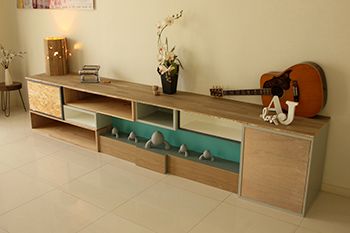
Step 1: Know your restrictionsBefore going crazy on the design, it’s good to know your restrictions. My main source of inspiration is the function. I’m educated by the form-follows-function-principle, so if my object has to satisfy a certain function, I find it essential to let it guide me. For example, for the latest cabinet built I knew exactly what I’d display in it, so the whole cabinet is designed around that particular function. You still have enormous amounts of freedom, but there are some parameters that you should keep in consideration at all times. It’s like building a table; if a customer expects you to make a table for 8 people, make sure 8 people can sit at the table and not just 6 because you think it’s prettier. The table has to be a comfortable height so people can sit at it to start with. And don’t forget to make sure the table is strong enough for all possible uses for a table. If you do not keep these considerations in mind, the client might end up being disappointed, even if the design is something out of this world.
The list of considerations and restrictions is a design brief, and every possible design has to be compared with it to test if it’s on the right track. To make sure you can properly test the considerations, first you have to make them measurable. Being able to seat 8 people on the table has to be translated into dimensions for the table, the same for the ideal height. This way you can really verify your design instead of guesstimating it.
If you have an easy project with just two things to keep in mind, don’t worry all too much about it, but if you have a more complicated project with lots of restrictions and demands from the client, you’d better make a real checklist so you don’t forget anything and you can easily verify your designs every time you have to make decisions. The design brief is something you can make together with the client because this way you can be absolutely sure you’re on the right track.
Although the word restriction doesnt sound like a very inspiring word, it helps me a lot in my designs through limiting the endless array of potential options. It’s very important that not everything is a possibility. Designing an object is easier when you know the functional limitations (seating 8 people) or expectations and style of the client. If you’re completely free to do whatever you like, chances are that you shut down instead of being inspired by the freedom. Nothing is as annoying as a client that lets you do whatever you want because they trust your abilities completely or because you are the designer.
Step 2: Fill that libraryA great source of inspiration is looking at the world, at nature and man-made objects. That’s a free and effortless source of inspiration; you just got to be open to it. We work with natural materials, so of course you can find loads of inspiration in nature. I share the same sources of inspiration with a lot of other woodworkers:
  • Furniture catalogues and furniture shops don’t only keep you updated about what’s out there and what the latest trends are, but they can also have a very inspiring effect. The Billy Bookcase of Ikea is a bit traditional, but what happens if you build one in solid walnut with bronze inlay? It might just be a new designer piece. A lot of my catalogues are from furniture manufacturers that don’t even make wooden furniture, but only use metal and plastic. It’s very inspiring to translate their designs in wood. It makes for a totally different effect and a nice start for the design process. There are an infinite amount of catalogues; all possible types of furniture, styles, materials, … Most of them include pictures of the pieces of furniture in an interior or landscape. This gives you a nice view on the impact of the piece, the dimensions in a real situation and for example what type of chairs best suit the table. Determining the dimensions might be a little difficult if you design something from scratch in a sketchbook. At least use a real example to help you decide on the dimensions you need. Once those are determined it’s a new bullet point on the design brief. If you have a client that needs something that’s not your style, it might help to browse a catalog with furniture in his style.  
  • Woodworking books and magazines are stuffed with new techniques and inspiring projects from readers. Step-by-step explanations of projects could be very inspiring because you see how others work. You don’t just learn new techniques but it challenges you to apply those techniques in other designs. If you are a novice woodworker wanting to try lamination, why make a cutting board like everyone? Make a birdhouse from laminated scraps and you instantly have a modern art birdhouse. Unless you’re in desperate need for a cutting board, like I was last week.
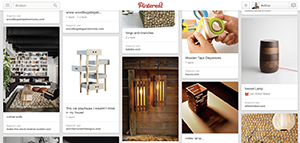
  • The internet. I love books, magazines and catalogs because those are well-arranged. This can’t be said about the internet which is absolutely replete with information that it’s more frightening than inspiring. While there’s just too much information, there are also wonderful tools on the internet to organise all this information into manageable chunks. The one I use all the time is Pinterest and I’m absolutely loving it! I mainly follow boards that have somewhat to do with wood and interior design, so every day I have truckloads of pictures right on my homepage, all somewhat my style and ready to inspire. I just have to look at them in the right mindset. This is one of the tools that is also very useful to find inspiration on ‘what’ to make, because daily I stumble upon things I haven’t even thought about making in wood, like a USB-stick or an iPhone cover. Woodworking is big on Pinterest, so it’s also a great source of inspiration for shop made tools, joinery, fancy hardware and tutorials about every aspect of woodworking.
  • Step 3: Let the library become fuzzySo after a while your head is one big library full of things youve seen before, in books, magazines, the internet, interiors and in nature... That big library is where all your ideas come from, if you like it or not. Every idea you come up with is some sort of combination of the things that are stored in your library. Over time, all the things youve seen before are mixed together and when you are designing something youre just putting the bits and pieces together. A handle of a cabinet youve seen before, placed on a cabinet door of OSB because youve seen design objects made of OSB before and it looked cool. The door is round because youve seen a round window in ships which also look crazy and its just the look youre after for the cabinet. You might think its an original idea, but in fact its an original combination of existing ideas. Being good at coming up with original combinations in fact means being trained in making those connections. You can train yourself just by challenging your own designs and becoming more experienced by doing it. However there are tools that can help you, Ive listed the ones I use the most below.
    Step 4: Tools to get the most out of your libraryThe point of the design process is to make things interesting. A box might just be a box, but if you want to make it exciting, there are a few tricks to do so. Making simple things interesting is easily done by making some straight lines into curves or including some color accents or nifty things like dowels or splines. If you have a complex design most of the times it’s already interesting because of its complexity, for example because of the different materials, the joinery, the large amount of detail,… If you have a very simple design, it might be awesome because of its simplicity. The problem area is in the middle; when your design is not very simple and not very exciting. You can choose if you want it to be more clean and simple or extremely interesting and complex.
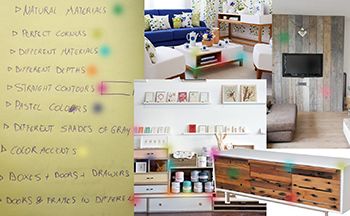
    A great tool I use to make designs more exciting is one that I learned from a high school professor, Bruno Van Son, one of the most inspiring professors Ive ever had. For example, you’re designing a box but everything you draw is too boring. Take a look at other products you like a lot and that reflect the look you’re after for your design. For each of these products, make a list about the things you like about them; WHY do you like it them so much? It might be the chrome hardware, the exotic wood species, the glossy finish, the visible dovetails,… be very specific until you have a list with things you can add to your design. The next step is to make a good combination of characteristics, because you can’t add all of them from 5 different products into one box, that might be a little overkill. Choose the things that you find most suitable, or mull over them until you’re satisfied.
    This is a tool you can use to make a design more interesting when yours is a little boring, but it might also be very helpful to determine how to design something that matches your interior. If you already have a bed and you want a matching dresser and nightstands, start by determining all the characteristics of the bed and determine which of those you want to implement in the nightstands and the dresser. Examples of the characteristics might be a glossy finish, entirely made in oak, visible dowels, live edge, rounded corners, walnut inlay,… To make matching furniture, you’re not obligated to copy every element; you can just make a selection. It will be far more original and designy if it isn’t just a copy but has some different characteristics. It will still match if there are still some similarities, so don’t worry about that. Because your bed is square and the nightstands are round doesn’t mean it will be an ugly combination.
    This tool is also applicable if you have to design and build a piece of furniture for a customer that has a different style than what you’re used to. Just look at the furniture he loves, either pictures he found online for inspiration, or the furniture he already has in his house and do the same exercise.
    Another tool that is very useful in the situation where you have to design something in a different style than your own is making mood boards. Let the customer select a lot of pictures or brands of things he loves; furniture, design objects, art etc., and put them together on a piece of paper. In a blink of an eye, you’ll see similarities between the objects and it will give you a great overview of the style itself and help you a lot while designing. Subconsciously, you’re actually doing the same exercise as described above; selecting elements and applying them to your design. As described above, a great tool to make mood boards is Pinterest, you can either make a board yourself or search for boards other people made in the style you’re after. It’s a more efficient way than cutting pictures from magazines and gluing them on a piece of paper, and there is so much content that it will inspire you for sure.
    The last thing you need to do when using mood boards is check if your new design fits the bill. You do that by placing your design on your mood board and it should blend in perfectly. If it doesn’t, go back to the drawing board.
    The last tool I’ll describe here is one I use to make existing designs more original. It’s just a list of ‘what ifs’; when you have an idea in your head, challenge it with some questions like ‘what if it was bigger?’, ‘what if it was smaller?’, ‘what if it had hair?’… This tool is very useful to challenge your own designs and make them more interesting. Imagine you’re making a desk lamp, how cool would it be if you took your design and just scaled it to a floor lamp without altering the proportions? With asking a simple ‘what if’-question you just came up with the awesome idea to make a gigantic desk lamp with 4x4’s and M24 bolds. Isn’t that way cooler than the millionth desk lamp? What if you add a splash of color? If you want an original and modern table, you don’t have to make a modern design, an 18th century table will do just fine. Just paint one of the legs bright pink and all of a sudden it’s a modern design-piece. You can find an overview of 100 challenging and inspiring ‘what if’-questions in this slideshow:

    100-Whats of Creativity from Don The Idea Guy Snyder
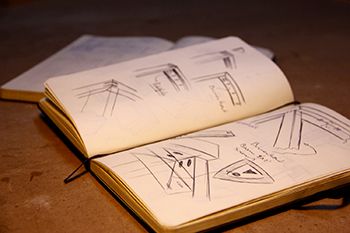
    Last but not least: keep a sketchbook! Dont sketch or write on loose papers because they will get lost or thrown away. It might be very inspiring to go through a sketchbook of 10 years ago, a year ago, or a week ago... Its not because an idea didnt make it for that project that its bad or that certain things cant be implemented in your new designs. And if you have a sketchbook, you should sketch while designing. Don’t feel bad if you’re not the best at drawing, nobody cares because you’re making amazing stuff in wood! But for designing those pieces of furniture, sketching is essential, so grab a pencil and go wild.

Read More..
My office: the beach!